
Thursday, June 28, 2018

Lupin up nearly 2% on partnership with Mylan to commercialise Enbrel biosimilar

Shares of Lupin added nearly 2 percent intraday Thursday as company partnered with Mylan to commercialise Enbrel biosimilar.

Through the partnership agreement, Mylan will commercialize Lupin's proposed etanercept biosimilar in Europe, Australia, New Zealand, Latin America, Africa and most markets throughout Asia, company said in release.

Enbrel is a TNF-inhibitoriindicated to treat certain autoimmune diseases, including rheumatoid arthritis, psoriatic arthritis, plaque psoriasis and ankylosing spondylitis, it added.

As per IQVIA data, Enbrel had global brand sales of approximately USD 11.6 billion for the 12 months ending December 31, 2017.

related news Indian Bank falls over 3.5% after it cancels dividend of Rs 6/share Add Colgate, target Rs 1,300; expect higher ad investment on flagship brand: Kotak Securities Market Update: Over 300 stocks hit new 52-week low on NSE; HDFC Bank, Infosys gain 1-2%

Vinita Gupta, CEO, Lupin said, "We are extremely pleased to announce this partnership as both Lupin and Mylan share a commitment to bring affordable and high quality medicines to market, especially in areas of unmet need."

The company has successfully completed its Etanercept biosimilar Phase 3 clinical trial in February 2018. It has filed the product with the European Medicines Agency and plans to file the product in other jurisdictions.

Under the terms of the agreement, Lupin will receive an up-front payment of USD 15 million and potential commercial milestones together with an equal share in net profits of the product.

At 10:19 hrs Lupin was quoting at Rs 899, up Rs 6.70, or 0.75 percent on the BSE.

Posted by Rakesh Patil First Published on Jun 28, 2018 10:27 am

Monday, June 25, 2018

Brokerages Expect AvalonBay Communities Inc (AVB) Will Post Quarterly Sales of $565.41 Million

Wall Street analysts predict that AvalonBay Communities Inc (NYSE:AVB) will report $565.41 million in sales for the current fiscal quarter, according to Zacks Investment Research. Six analysts have made estimates for AvalonBay Communities’ earnings, with the highest sales estimate coming in at $569.11 million and the lowest estimate coming in at $559.91 million. AvalonBay Communities posted sales of $530.51 million during the same quarter last year, which suggests a positive year over year growth rate of 6.6%. The firm is scheduled to announce its next quarterly earnings report on Wednesday, August 1st.

According to Zacks, analysts expect that AvalonBay Communities will report full year sales of $2.27 billion for the current financial year, with estimates ranging from $2.24 billion to $2.30 billion. For the next year, analysts expect that the company will post sales of $2.35 billion per share, with estimates ranging from $2.27 billion to $2.40 billion. Zacks’ sales calculations are an average based on a survey of research firms that cover AvalonBay Communities.

Get AvalonBay Communities alerts:

AvalonBay Communities (NYSE:AVB) last issued its earnings results on Wednesday, April 25th. The real estate investment trust reported $1.03 earnings per share (EPS) for the quarter, missing analysts’ consensus estimates of $2.19 by ($1.16). The business had revenue of $560.80 million for the quarter, compared to analysts’ expectations of $556.23 million. AvalonBay Communities had a return on equity of 7.57% and a net margin of 35.62%. The business’s quarterly revenue was up 7.4% on a year-over-year basis. During the same period last year, the company posted $2.09 earnings per share.

Several research firms recently weighed in on AVB. Jefferies Financial Group reaffirmed a “hold” rating and issued a $166.00 price objective on shares of AvalonBay Communities in a research note on Friday, April 13th. Citigroup raised AvalonBay Communities from a “neutral” rating to a “buy” rating and set a $190.00 price objective for the company in a research note on Friday, April 6th. Robert W. Baird set a $178.00 price objective on AvalonBay Communities and gave the company a “buy” rating in a research note on Friday, March 2nd. Argus dropped their price objective on AvalonBay Communities from $210.00 to $190.00 and set a “buy” rating for the company in a research note on Thursday, March 1st. Finally, BMO Capital Markets set a $175.00 price objective on AvalonBay Communities and gave the company a “hold” rating in a research note on Friday, March 2nd. Two equities research analysts have rated the stock with a sell rating, fourteen have given a hold rating and nine have given a buy rating to the stock. AvalonBay Communities currently has an average rating of “Hold” and an average price target of $189.32.

Institutional investors have recently added to or reduced their stakes in the business. MUFG Americas Holdings Corp purchased a new position in AvalonBay Communities during the fourth quarter worth $189,000. Assetmark Inc. increased its position in AvalonBay Communities by 44.1% during the first quarter. Assetmark Inc. now owns 1,156 shares of the real estate investment trust’s stock worth $190,000 after buying an additional 354 shares in the last quarter. Compagnie Lombard Odier SCmA purchased a new position in AvalonBay Communities during the fourth quarter worth $236,000. Miles Capital Inc. boosted its holdings in shares of AvalonBay Communities by 32.6% during the first quarter. Miles Capital Inc. now owns 1,648 shares of the real estate investment trust’s stock worth $271,000 after purchasing an additional 405 shares during the last quarter. Finally, Bbva Compass Bancshares Inc. acquired a new stake in shares of AvalonBay Communities during the first quarter worth $284,000. 93.16% of the stock is owned by institutional investors.

Shares of AvalonBay Communities traded up $0.92, reaching $170.83, during trading hours on Monday, Marketbeat.com reports. 1,218,591 shares of the company’s stock were exchanged, compared to its average volume of 708,200. The company has a market cap of $23.48 billion, a price-to-earnings ratio of 19.82, a price-to-earnings-growth ratio of 2.58 and a beta of 0.36. AvalonBay Communities has a 1 year low of $152.65 and a 1 year high of $196.13. The company has a current ratio of 0.75, a quick ratio of 0.75 and a debt-to-equity ratio of 0.74.

The business also recently declared a quarterly dividend, which will be paid on Monday, July 16th. Shareholders of record on Friday, June 29th will be given a dividend of $1.47 per share. This represents a $5.88 annualized dividend and a yield of 3.44%. The ex-dividend date of this dividend is Thursday, June 28th. AvalonBay Communities’s payout ratio is 68.21%.

AvalonBay Communities Company Profile

As of December 31, 2017, the Company owned or held a direct or indirect ownership interest in 288 apartment communities containing 84,158 apartment homes in 12 states and the District of Columbia, of which 21 communities were under development and nine communities were under redevelopment. The Company is an equity REIT in the business of developing, redeveloping, acquiring and managing apartment communities in leading metropolitan areas primarily in New England, the New York/New Jersey Metro area, the Mid-Atlantic, the Pacific Northwest, and the Northern and Southern California regions of the United States.

Get a free copy of the Zacks research report on AvalonBay Communities (AVB)

For more information about research offerings from Zacks Investment Research, visit Zacks.com
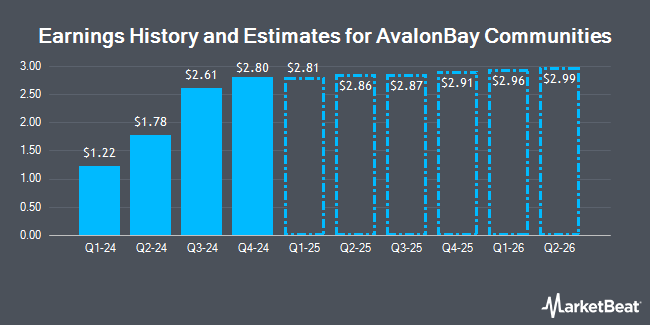
Earnings History and Estimates for AvalonBay Communities (NYSE:AVB)

Sunday, June 24, 2018

What Is America Doing To China? The Same Things It Did To Japan

&l;p&g;&l;img class=&q;dam-image bloomberg size-large wp-image-42587502&q; src=&q;https://specials-images.forbesimg.com/dam/imageserve/42587502/960x0.jpg?fit=scale&q; data-height=&q;640&q; data-width=&q;960&q;&g; Photographer: Giulia Marchi/Bloomberg

Washington has sent a clear and loud message to China in recent months: you can no longer take the American market for granted. You must develop your own market, so as to balance the trade books.

&a;nbsp;

That&a;rsquo;s why Washington has announced a host of tariffs on products imported from China.

&a;nbsp;

This message isn&a;rsquo;t new. It echoes a similar message America sent to Japan back on September 22, 1985, at the Plaza Accord.

&a;nbsp;

That&a;rsquo;s when the Japanese economy was growing by leaps and bounds by running a big trading surplus with the US.

&a;nbsp;

We know what happened in the aftermath of the Plaza Accord. The Japanese economy went on a rollercoaster ride before descending into a prolonged stagnation that has lasted to this day.

&a;nbsp;

Once a serious contender for world leadership, Japan is now counting lost decades.

&a;nbsp;

Will China follow the same fate? It isn&a;rsquo;t clear. China doesn&a;rsquo;t share the same demographic problems that added to Japan&a;rsquo;s economic growth woes. But it doesn&a;rsquo;t share Japan&a;rsquo;s innovation drive either, with which to overcome the &a;ldquo;middle-income trap.&a;rdquo;

&a;nbsp;

China&a;rsquo;s Key Metrics

&l;/p&g;&l;div class=&q;table-wrapper&q;&g;&l;table&g;&l;tbody&g;&l;tr&g;&l;td width=&q;312&q;&g;GDP Annual Growth Rate&l;/td&g; &l;td width=&q;312&q;&g;6.8%&l;/td&g; &l;/tr&g;&l;tr&g;&l;td width=&q;312&q;&g;Current Account to GDP&l;/td&g; &l;td width=&q;312&q;&g;1.3%&l;/td&g; &l;/tr&g;&l;tr&g;&l;td width=&q;312&q;&g;Government Debt To GDP&l;/td&g; &l;td width=&q;312&q;&g;44.3%&l;/td&g; &l;/tr&g;&l;tr&g;&l;td width=&q;312&q;&g;Government Budget to GDP&l;/td&g; &l;td width=&q;312&q;&g;-3.5%&l;/td&g; &l;/tr&g;&l;/tbody&g;&l;/table&g;&l;/div&g;

Source: Tradingeconomics 6/23/18

&a;nbsp;

That&a;rsquo;s a development stage when a country cannot longer maintain high growth rates by copying foreign technologies and combining them with low-wage labor.

&a;nbsp;

Still, there&a;rsquo;s China&a;rsquo;s domestic consumer market with a vast potential. But that potential will only remain so until China develops the institutions and policies that support a consumer economy. Like redirecting bank lending from the provincial and municipal owned sectors to the consumer sector.

&a;nbsp;

That&a;rsquo;s easier said than done, for a couple of reasons. One of them is that China&a;rsquo;s banks by and large remain governmentally owned. This means that credit is allocated by political mandate rather than market forces. Bank loans end up going to State Owned Enterprise (SOEs), Town Village Enterprises (TVEs), and land developers to fulfil the agenda of labor unions and government bureaucrats.

&a;nbsp;

Another reason is China&a;rsquo;s underdeveloped welfare and healthcare systems, which forces households to maintain high savings rates.

&a;nbsp;

Then there&a;rsquo;s China&a;rsquo;s debt, which officially stands at 48.5% -- though where it stands unofficially is anyone&a;rsquo;s guess. Official figures do not include the debt of the broader government sector, which includes banks, SOEs, TVEs, and pension funds.

&a;nbsp;

While it&a;rsquo;s unclear whether China will follow the fate of the Japanese, one thing is clear: China isn&a;rsquo;t the same as Japan when it comes to yielding to foreign pressure. Even if that comes at a great cost. At least that&a;rsquo;s what it has demonstrated during its long history.

&a;nbsp;

Unlike Japan, China&a;rsquo;s regimes confronted foreign traders before. And if they feel threatened, they will do the same this time around.

&a;nbsp;

Are financial markets prepared to bear that?

Wednesday, June 20, 2018

��Golden Ticket�� Visas for Investors Need Overhaul, Lawmakers Say

LISTEN TO ARTICLE 2:42 SHARE THIS ARTICLE Facebook Twitter LinkedIn Email

A visa program that offers wealthy foreigners legal residence in the U.S. if they invest in projects that create jobs needs to be overhauled or eliminated because of concern over fraud and threats to national security, senators from both parties said in a rare moment of bipartisanship.

Judiciary Committee Chairman Chuck Grassley of Iowa was joined by Democrats and other Republicans at a hearing Tuesday in faulting a program known as a “golden ticket” that allows foreigners to reside in the U.S. if they invest at least $500,000 and create at least 10 jobs.

Congress created the EB-5 program in 1990 to boost economic development, especially in low-income and rural areas. The visa program has become wildly popular with Chinese investors, and real estate developers have been the main beneficiaries of their cash. There’s a limit of about 10,000 EB-5s per year.

Grassley said the program is rife with "cases of fraud, corruption and threats to national security" and that he’s been working for years to try to revamp it. He said his efforts have been thwarted by supporters of the program.

U.S. residents have been charged with using money intended to create jobs for personal gain, Grassley said. He also said Iranian operatives tried to infiltrate the U.S. using the program and that Chinese nationals claimed they were fraudulently coerced into investing in a real-estate project.

An Immigration ‘Golden Ticket’ Developers Love: QuickTake Q&A

Senator Dianne Feinstein of California, the Judiciary Committee’s top Democrat, said it’s not fair to sell visas to the rich while others struggle to come to the U.S. “It’s wrong to sell American citizenship,” she said. “The wealthy can cut to the front of the line. This on its face is fundamentally un-American.” Feinstein also said the program has led to fraud.

At the hearing, L. Francis Cissna, director of U.S. Citizenship and Immigration Services at the Department of Homeland Security, acknowledged abuse and called for changes such as site checks and improved vetting.

The program allows foreign investors to reside legally in the U.S. if they put $1 million into a new commercial enterprise that creates at least 10 jobs. If they make the investment in a “targeted employment area” -- either in a rural community or one with high unemployment -- the minimum investment is lowered to $500,000.

The Kushner family used EB-5 funds to build the Trump Bay Street apartment tower in New Jersey, which opened in November 2016 right before Jared Kushner’s father-in-law, Donald Trump, was elected president. Last year, Kushner’s sister was criticized for mentioning the family’s Trump ties while pitching wealthy Chinese to get visas by investing in another Kushner apartment complex.

There are reports that the U.S. Securities and Exchange Commission and federal prosecutors in New York issued subpoenas to Kushner Cos. last year seeking details about its use of the EB-5 program.

— With assistance by Anne Cronin, and Kathleen Hunter